
Having driven past the turnoff to Gluepot numerous times, this year I had the chance to finally visit. I wondered as I drove up the track from Taylorville Station what exactly I was expecting. After seeing so many beautiful photos of birds I hadn't seen, I suppose I was expecting quite a lot. Malleefowl wandering around, large flocks of Scarlet-chested Parrots, Mallee Emu-wrens hopping about the camping areas, Striated Grasswrens sitting atop the spinifex grasses.
The first nice surprise was the road into Gluepot. I don't know if it is always as nice to drive, but there was a very comfortable, non bone-jarring track all the way to the Visitors Centre. The first sign I saw said something about a walking track that was 10 kms long. In the heat of summer I thought to myself I probably would give that one a miss. Stopping in to register and pay for my stay (a very paltry amount), I was struck by the ease of finding information in the Visitors Centre. No-one around, but fantastic displays and resources, both free and for sale. I was a little sad to see the polo shirts weren't in my size, but I can always order them online.
I looked to see where everyone else was camping. Ummm... there was no-one else there. Amazingly, aside from the Rangers, I had two complete days to myself to explore this amazing conservation reserve. For whatever reason, I chose the Grasswren Campsite. With map in hand I headed off, full of the grasswrens hopping around near the campsite. Didn't quite turn out that way, but the camping area was better than I had expected, fairly open, well treed, well maintained and a dunny. I found my campsite, number 19, that had a table and chairs and set up the swag and unloaded all the things I'd need over the coming days and nights - cooking gear, torches, solar shower etc.
Sitting down having a munch on some food, I wanted to soak in the atmosphere. I was here. Gluepot! But there was something missing. It was a stinker of a day, but the lack of birdsong was a bit of a worry. Still checking for the Malleefowl wandering around on the ground and the Scarlet-chested Parrot flocks I was sure I'd see, I decided to wander around the camping area. The first thing I saw was a rather large Sand Goanna. Glad I'd picked the campsite I had because it was under the only other site with a table and chairs. Oh well, so long as it kept to its site, I'd keep to mine and we'd both be happy. It was a good reminder to ensure no food was left out and no scraps left after meals.
I decided leaving everything out was probably ok so long as it was inside locked boxes. My first stroll was onto the other side of the road from the campsite and immediately started hearing a lot more birds - Babblers, Weebills, Grey Butcherbirds, White-fronted Honeyeaters, Striated Pardalotes .... mmm ... not really Malleefowl or Mallee Emu-wrens. Back to camp and through to the other side. Even less noise here, and I quickly realised I could actually lose track of where the campsite was. Still steamy and hot, not the best thought and I hadn't brought my water bottle. Lesson number 2. Always take water, no matter how short the walk is likely to be.
After a rather pleasant but a tad disappointing couple of short strolls, I decided it was time to check out the bird hides. There were water tanks and water feeders at each hide. Surely there would be more bird action here. And there was. Maybe I had expected too much, but the expectations became much more realistic with this first experience at the Hide. Mulga Parrots provided the first of many wonderful photo opportunities, but they had to share their water with a few others. The main bird species by far at almost all of the hide water troughs was the Yellow-plumed Honeyeater. Sometimes up to 30 of these honeyeaters would be flitting around the troughs. Late in the afternoon I decided to return to camp, have some dinner and return to the Hide closer to dark. This was a good plan as I had a Little Eagle fly through and then perch just beyond the water trough in a tree. At this range (about 10 metres) Little Eagles don't look so little, and the talons look extremely large. Soon after the Little Eagle flew off (alas it didn't have a drink and give even closer views), the Common Bronzewings started to appear - first one then five then over a dozen. The light was fading and I tried to get better shots changing the settings on the camera, until in the end I just enjoyed the show.
Back to camp, a quick shower, and then download the photos for the day.
The next morning I woke up early, the Owlet Nightjars that had started the evening before had returned for their roosting trees during the day. Although I only saw an outline of one in the fading light the night before, both early evenings and early mornings I was at Gluepot was a cacophony of Owlet Nightjar calls. Off to the Grasswren Trak, surely I would see some grasswrens there!
Well, no. Gluepot when I was there was becoming a little frustrating. None of the "common" birds I was hoping to see, and lots of the same birds. White-winged Choughs, Grey Currawongs, Rufous Whistlers, but really, nothing of the "new" species. Until the last part of the Grasswren Trak. I now knew the walk had taken longer than I had expected, and I was on the service road returning towards the Grasswren Hide, when I heard a new call. Finally! Now what was it that I'd checked before I'd left the car? Thankfully this particular bird was very accommodating, and just in case I hadn't seen it properly, came over to the roadside and perched in a tree, calling loudly. A Striped Honeyeater. Yay! A lifer, maybe not the one I was expecting, but it was nice to see one. I managed some fairly decent shots before it flew off toward the Hide area. I had run out of water and decided that was a good place to head to, and back to the car. I could see the Hide in the distance and was basically starting to think about what I was going to do next when two large birds alighted from a bush only a few metres in front of me. I was delighted when the two Southern Boobooks perched only 15 metres from the road in clear view. A great photo opportunity taken gladly. My spirits perked up and I continued on back to the car. Consulting the map I worked out my route for the day, basically going from Hide to Hide. The rest of the day was spent at Hides or on long walks. Despite seeing quite a few different species, nothing new turned up for me that day. The list was growing but I was starting to feel a little disappointed that I hadn't even seen some of the very common birds for the area that I had never seen.
The last morning at Gluepot was again an early start and a quick trip to the Grasswren Hide. Nothing new, but I had read a bit more on some of the flyers I had taken from the Visitors Centre about potential sites for different birds. The Grasswrens were supposed to have been seen on top of a spinifex covered red sandhill on my way out of the Reserve so I stopped the car and headed into the scrub. I probably was hopeful but not expecting to see much. I made it to the marker on the sandhill and despite looking and listening heard absolutely nothing nearby. I turned around and started to walk back to the car when I noticed two birds hopping around under a bush. when someone named the "Shy Heathwren", I think they forgot to tell these two about the "shy" part. One of them almost took a peck at something next to my shoe!. They moved quick and in shadows, and even though the photos I managed weren't spectacular, I had at least seen one of the "common" birds at Gluepot.
I think the time of year I was there was probably not the best time for seeing the species I was really looking for. I can't fault the setup, and the chances for wonderful photos is the best I have come across. The camping sites were as good as you could expect and the Visitors Centre has a lot of wonderful information. I'd recommend anyone not from around the area to call in and spend a few days. It was a worthwhile trip, and I'll be back.
Here are a selection of photos.




The first nice surprise was the road into Gluepot. I don't know if it is always as nice to drive, but there was a very comfortable, non bone-jarring track all the way to the Visitors Centre. The first sign I saw said something about a walking track that was 10 kms long. In the heat of summer I thought to myself I probably would give that one a miss. Stopping in to register and pay for my stay (a very paltry amount), I was struck by the ease of finding information in the Visitors Centre. No-one around, but fantastic displays and resources, both free and for sale. I was a little sad to see the polo shirts weren't in my size, but I can always order them online.
I looked to see where everyone else was camping. Ummm... there was no-one else there. Amazingly, aside from the Rangers, I had two complete days to myself to explore this amazing conservation reserve. For whatever reason, I chose the Grasswren Campsite. With map in hand I headed off, full of the grasswrens hopping around near the campsite. Didn't quite turn out that way, but the camping area was better than I had expected, fairly open, well treed, well maintained and a dunny. I found my campsite, number 19, that had a table and chairs and set up the swag and unloaded all the things I'd need over the coming days and nights - cooking gear, torches, solar shower etc.
Sitting down having a munch on some food, I wanted to soak in the atmosphere. I was here. Gluepot! But there was something missing. It was a stinker of a day, but the lack of birdsong was a bit of a worry. Still checking for the Malleefowl wandering around on the ground and the Scarlet-chested Parrot flocks I was sure I'd see, I decided to wander around the camping area. The first thing I saw was a rather large Sand Goanna. Glad I'd picked the campsite I had because it was under the only other site with a table and chairs. Oh well, so long as it kept to its site, I'd keep to mine and we'd both be happy. It was a good reminder to ensure no food was left out and no scraps left after meals.
I decided leaving everything out was probably ok so long as it was inside locked boxes. My first stroll was onto the other side of the road from the campsite and immediately started hearing a lot more birds - Babblers, Weebills, Grey Butcherbirds, White-fronted Honeyeaters, Striated Pardalotes .... mmm ... not really Malleefowl or Mallee Emu-wrens. Back to camp and through to the other side. Even less noise here, and I quickly realised I could actually lose track of where the campsite was. Still steamy and hot, not the best thought and I hadn't brought my water bottle. Lesson number 2. Always take water, no matter how short the walk is likely to be.
After a rather pleasant but a tad disappointing couple of short strolls, I decided it was time to check out the bird hides. There were water tanks and water feeders at each hide. Surely there would be more bird action here. And there was. Maybe I had expected too much, but the expectations became much more realistic with this first experience at the Hide. Mulga Parrots provided the first of many wonderful photo opportunities, but they had to share their water with a few others. The main bird species by far at almost all of the hide water troughs was the Yellow-plumed Honeyeater. Sometimes up to 30 of these honeyeaters would be flitting around the troughs. Late in the afternoon I decided to return to camp, have some dinner and return to the Hide closer to dark. This was a good plan as I had a Little Eagle fly through and then perch just beyond the water trough in a tree. At this range (about 10 metres) Little Eagles don't look so little, and the talons look extremely large. Soon after the Little Eagle flew off (alas it didn't have a drink and give even closer views), the Common Bronzewings started to appear - first one then five then over a dozen. The light was fading and I tried to get better shots changing the settings on the camera, until in the end I just enjoyed the show.
Back to camp, a quick shower, and then download the photos for the day.
The next morning I woke up early, the Owlet Nightjars that had started the evening before had returned for their roosting trees during the day. Although I only saw an outline of one in the fading light the night before, both early evenings and early mornings I was at Gluepot was a cacophony of Owlet Nightjar calls. Off to the Grasswren Trak, surely I would see some grasswrens there!
Well, no. Gluepot when I was there was becoming a little frustrating. None of the "common" birds I was hoping to see, and lots of the same birds. White-winged Choughs, Grey Currawongs, Rufous Whistlers, but really, nothing of the "new" species. Until the last part of the Grasswren Trak. I now knew the walk had taken longer than I had expected, and I was on the service road returning towards the Grasswren Hide, when I heard a new call. Finally! Now what was it that I'd checked before I'd left the car? Thankfully this particular bird was very accommodating, and just in case I hadn't seen it properly, came over to the roadside and perched in a tree, calling loudly. A Striped Honeyeater. Yay! A lifer, maybe not the one I was expecting, but it was nice to see one. I managed some fairly decent shots before it flew off toward the Hide area. I had run out of water and decided that was a good place to head to, and back to the car. I could see the Hide in the distance and was basically starting to think about what I was going to do next when two large birds alighted from a bush only a few metres in front of me. I was delighted when the two Southern Boobooks perched only 15 metres from the road in clear view. A great photo opportunity taken gladly. My spirits perked up and I continued on back to the car. Consulting the map I worked out my route for the day, basically going from Hide to Hide. The rest of the day was spent at Hides or on long walks. Despite seeing quite a few different species, nothing new turned up for me that day. The list was growing but I was starting to feel a little disappointed that I hadn't even seen some of the very common birds for the area that I had never seen.
The last morning at Gluepot was again an early start and a quick trip to the Grasswren Hide. Nothing new, but I had read a bit more on some of the flyers I had taken from the Visitors Centre about potential sites for different birds. The Grasswrens were supposed to have been seen on top of a spinifex covered red sandhill on my way out of the Reserve so I stopped the car and headed into the scrub. I probably was hopeful but not expecting to see much. I made it to the marker on the sandhill and despite looking and listening heard absolutely nothing nearby. I turned around and started to walk back to the car when I noticed two birds hopping around under a bush. when someone named the "Shy Heathwren", I think they forgot to tell these two about the "shy" part. One of them almost took a peck at something next to my shoe!. They moved quick and in shadows, and even though the photos I managed weren't spectacular, I had at least seen one of the "common" birds at Gluepot.
I think the time of year I was there was probably not the best time for seeing the species I was really looking for. I can't fault the setup, and the chances for wonderful photos is the best I have come across. The camping sites were as good as you could expect and the Visitors Centre has a lot of wonderful information. I'd recommend anyone not from around the area to call in and spend a few days. It was a worthwhile trip, and I'll be back.
Here are a selection of photos.
White-fronted Honeyeater


Mulga Parrot


Southern Boobook


Striped Honeyeater


Varied Sittella

White-browed Babbler


White-browed Treecreeper

Brown-headed Honeyeater

Chestnut-rumped Thornbill

Common Bronzewing

Grey Butcherbird

Little Eagle


Shy Heathwren

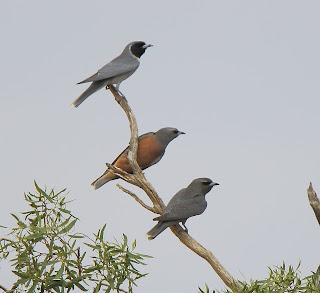
Woodswallows

Yellow-plumed Honeyeater


