Thank you for dropping by to check out my blog. You will see a lot of other Blogs about birds I follow down the left hand side. I strongly encourage you to check some of these out as well, they are entertaining and I love to see birds from all over the world, I hope you do too.
Cheers,
Richard
Showing posts with label Grey Shrike-thrush; Northern Territory. Show all posts
Showing posts with label Grey Shrike-thrush; Northern Territory. Show all posts
Spending 2 weeks in Kakadu and the Douglas-Daly region was a time to get used to the sounds of new birds, and the small birds were no exception. By far the friendliest was the Lemon-bellied Flycatcher. A very inquisitive bird that constantly flew close to where we walked. On more than one occasion, one of these little birds came to almost arms length above me on a branch and there was not enough distance to get all the bird in the photo. More similar to a robin rather than the other flycatchers, but a delightful, busy bird to watch.
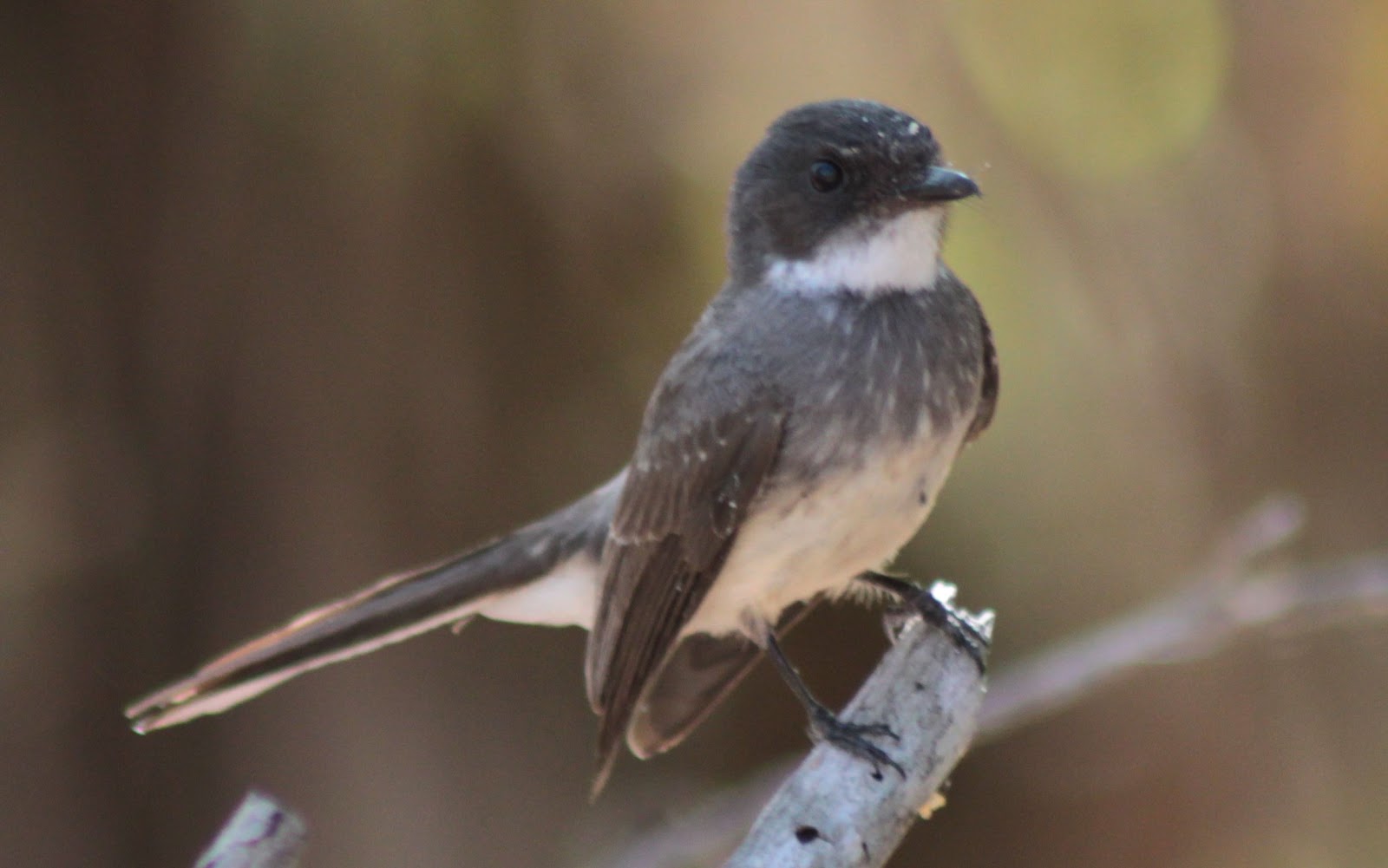
The fantails were an interesting mix. The grey fantails would display themselves, and fan their tails, whereas the Northern Fantail was much less extravagant with its tail movement, and the Mangrove Fantail was extremely shy in comparison. The Northern Fantail was in many of the treed places the lemon-bellied flycatcher was, and was similar in that its movements were largely catching insects, then perching and watching until the next victim was spotted. The Mangrove Fantail was only spotted in the pandanas-strewn riverside of the Douglas River, in the thickly branched lower regions of the larger trees or close by to this cover.
Perhaps the most surprising small bird I saw (for me) was the Golden-headed Cisticola. I had seen these birds in Victoria and was delighted to see them again. They were in the tall grasses around the campground at Gunlom and were easy to hear, but not the easiest to spot wandering around. However, standing quietly and close to the tall spears beside the campground and in the grass/thickets near the camping ground manager's/day use toilets (always a tricky thing with camera in hand!), they usually came up for a perch to see what was around.
Lake Woods is a place we had been told about by friends last year. It was our first stop on a 6 month long service leave holiday in late August 2010. On that occasion, there were quite a few birds, but nothing like we experienced this year. We had arrived right on dusk and saw very few birds the night before. On Sunday morning, we awoke to a beautiful sound of arriving birds. and they came in their hundreds. Thankfully I've never experienced bombing raids in any shape or form, but that was my impression - wave after wave of birds arriving. The first ones started coming just as it was nearly sunrise:
At this stage it was difficult to tell what they were, or what was to come, but this was a small group. As the sun started to break the morning sky, we started to see other birds and we could start identifying a few. Small groups of pelicans were among the arrivals:
There were some birds that had been at the lake all night we suspected, and this Darter was an early riser,
for a little while we watched the waves of birds, mainly one sort but difficult to identify arrive. Finally we started to see they were black and pied cormorants, but by far the most were the black shapes. Black and Whistling Kites were hunting low over the shore-trees and terns were constantly flying up and down the shoreline searching for food. We could see some of the cormorants and egrets starting to land in the trees opposite us across the lake, presumably to catch the first rays of the morning sun. The waves of birds still continued to arrive by this stage into the hundreds. Straw-necked Ibis and Nankeen Night Herons stalked along the shoreline, prodding the edges of the water. As the sun rose, we were starting to be treated to some beautifully coloured "fly-bys":
And still they arrived in numbers. We could see spoonbills and egrets as well, much easier to spot due to their light colours. It was hard to know which way to look there was so much starting to happen. The cormorants continued to come in from the east, the kites and terns continued to hawk the shoreline for food, and the shore birds continued to peck their way through breakfast, or dry themselves off after a morning dip:
As the sky lightened, the arrivals increased in number
This continued for about half an hour. Already it was feeling like the day had been superb, but the real excitement came at about 8:00, an hour after sunrise. There were still hundreds of birds to look at, but a commotion started and the cormorants came from the west, skimming low over the water, almost directly in front of the campsites. Similar to their arrival high above, the numbers started off in groups of about 10 and then increased to a point where they were just a mass of birds, all hurrying to be somewhere.
And then we could hear it happening. A feeding frenzy. Some of the birds had found what all of them had come to get - the Fish! Some stopped before they got to the crowds as they spotted the fish below:
But the majority kept going to the feeding frenzy ahead, and they just kept coming, and kept coming: The horde was so big, the lens on the camera couldn't fit them in:
And they were gorging themselves on fish, constantly ducking and then resurfacing the a wriggling fish firmly clasped in their beaks. The early risers and a few of the early feeders found refuge above the hord. The cormorants were so thick we made comments they looked like bats hanging in the trees:
This frenzy had attracted others too. The Whistling Kites harassed the terns who had either stolen fish from cormorants or caught them themselves. and the Egrets put on a marvellous display of just how many can hang in the air above the extremities of the massed cormorants, trying to spot fish from their slightly higher vantage point:
But realistically, the only way to explain the activity in the water and above them in the air is to show a short video
This truly was a wonderful experience and a perfect way to end a bird-watching filled 2 week holiday with the family.
For anyone wanting to get to Lake Woods, there is a grid just north of the township of Elliott. On the left hand side as you are heading north, after the grid, there is a track. Turn onto the track and continue along this track for 11 kms. there are picnic tables next to the lake, and plenty of places to camp. the night we were there, there were roughly 20 groups of caravans and campers.